Are Free VPNs Safe?
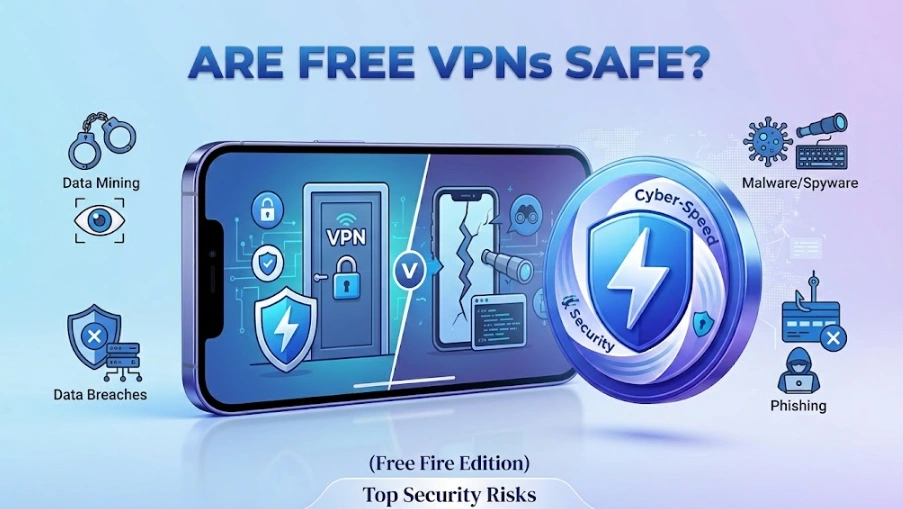
Every day, millions of people search for a free VPN or free proxy list to protect their privacy, unblock websites, or stay safe on public Wi-Fi.
Unfortunately, not every free VPN is built to protect you.
Some free VPN providers genuinely care about user privacy. Others collect browsing data, inject advertisements, or even sell user information to third parties.
So how do you tell the difference?
In this guide, we'll explain how free VPNs actually work, the biggest privacy risks, and which free VPNs are generally considered trustworthy by both cybersecurity experts and experienced users.
Why Are Some Free VPNs Dangerous?
Running a VPN service is expensive.
A provider needs:
- thousands of servers
- global bandwidth
- engineers
- security audits
- customer support
All of this costs money.
If a company offers unlimited VPN access completely free, it's reasonable to ask one question:
How are they making money?
In many cases, the answer isn't subscriptions—it's your data.
Security companies like Avast warn that some free VPNs monetize users by collecting browsing information, serving targeted ads, or sharing usage data with partners.
How Some Free VPNs Make Money
| Business Model | Privacy Risk |
|---|---|
| Paid subscriptions | Low |
| Freemium upgrades | Low |
| Advertising | Medium |
| Selling user data | High |
| Tracking browsing behavior | High |
What Data Can a VPN See?
When connected to a VPN, the provider can potentially see:
- your IP address
- connection timestamps
- bandwidth usage
- device information
Depending on its logging policy, it may also record:
- websites visited
- DNS requests
- connection history
This is why a VPN requires trust. Instead of trusting your Internet Service Provider, you're placing that trust in the VPN company.
Not All "No-Logs" Policies Mean the Same Thing
One of the biggest marketing terms in the VPN industry is:
No Logs
But that phrase doesn't always mean the same thing.
Some providers:
- keep no browsing history
- still store connection metadata
- retain diagnostic logs
- collect crash reports
The safest VPN companies usually publish:
- independent security audits
- transparency reports
- clear privacy policies
rather than simply claiming "No Logs."
Signs a Free VPN May Not Be Safe
- asks for unnecessary permissions
- excessive ads
- unknown company
- no privacy policy
- vague website
- no independent audit
- unlimited everything with no business model
Reddit Users Usually Recommend Only a Few Free VPNs
Rather than relying only on affiliate review sites, many people check Reddit communities like r/VPN and r/privacy for real user experiences.
Across multiple discussions, two names appear repeatedly:
- Proton VPN Free
- Windscribe Free
Users generally praise Proton VPN for its unlimited data and privacy-focused approach, while Windscribe is appreciated for offering more server locations with a monthly data allowance. At the same time, experienced users frequently caution that no free VPN is perfect and that every free service involves some trade-off.
Safest Free VPNs We Recommend
Best for: Daily browsing, banking, public Wi-Fi, privacy.
Pros
- Unlimited data
- Excellent privacy reputation
- No ads
- Strong encryption
- Open-source apps
Cons
- Cannot manually choose many server locations
- Slower during peak hours
Best for: Travel, streaming occasionally.
Pros
- Around 10 GB free every month
- Multiple countries
- Ad & tracker blocker
- Good speeds
Cons
- Monthly limit
Best for: People new to VPNs.
Pros
- Beginner friendly
- Easy apps
Cons
- Small monthly allowance
How to Protect Your Privacy Even Without Paying
Using a trustworthy VPN is only one part of staying private online. You should also:
- Always use HTTPS websites.
- Turn on multi-factor authentication for important accounts.
- Keep your browser and operating system updated.
- Avoid downloading apps from unknown sources.
- Review app permissions regularly.
- Use a password manager with unique passwords.
- Enable your VPN's kill switch if available.
Good privacy habits often provide more protection than simply installing any VPN.
When Should You Upgrade to a Paid VPN?
A free VPN is enough if you mainly:
- browse securely
- use public Wi-Fi
- check email
- access social media
A paid VPN makes more sense if you need:
- faster speeds
- streaming
- torrenting
- more server locations
- multiple devices
- advanced privacy features
FAQ
Quick answers to common questions.
Can a free VPN steal my data?
Some can. A VPN provider has the ability to see certain connection information, so choosing a trustworthy company with a transparent privacy policy is essential.
Is Proton VPN Free really unlimited?
Yes. Proton VPN's free plan does not impose a data cap, although server choices are limited and speeds may vary.
Is Windscribe Free safe?
Windscribe is widely regarded as one of the safer free VPN options thanks to its transparent privacy approach, though the free plan includes a monthly data limit.
Should I trust free VPNs from app stores?
Not automatically. Before installing any VPN, check who operates it, read its privacy policy, and look for independent security reviews or audits.
Final Thoughts
Free VPNs are not automatically unsafe, but they aren't all created equal.
The biggest mistake is assuming every VPN protects your privacy simply because it says "free" or "no logs."
Choosing a provider with a transparent business model, a clear privacy policy, and a strong reputation can dramatically reduce your risk. For most users, trusted freemium services such as Proton VPN Free and Windscribe Free strike the best balance between privacy and usability, while many unknown "unlimited free VPNs" should be approached with caution.